The assembly line evolution transformed the way people manufacture products and perform their jobs. Factories began implementing mass production techniques to create items more quickly and at a lower cost. Ford’s moving assembly line allowed workers to earn higher wages while working fewer hours. However, some employees were required to repeat the same task continuously, resulting in reduced control over their work. This significant change led to lower prices for cars and other goods, stimulated economic growth, and generated new employment opportunities.
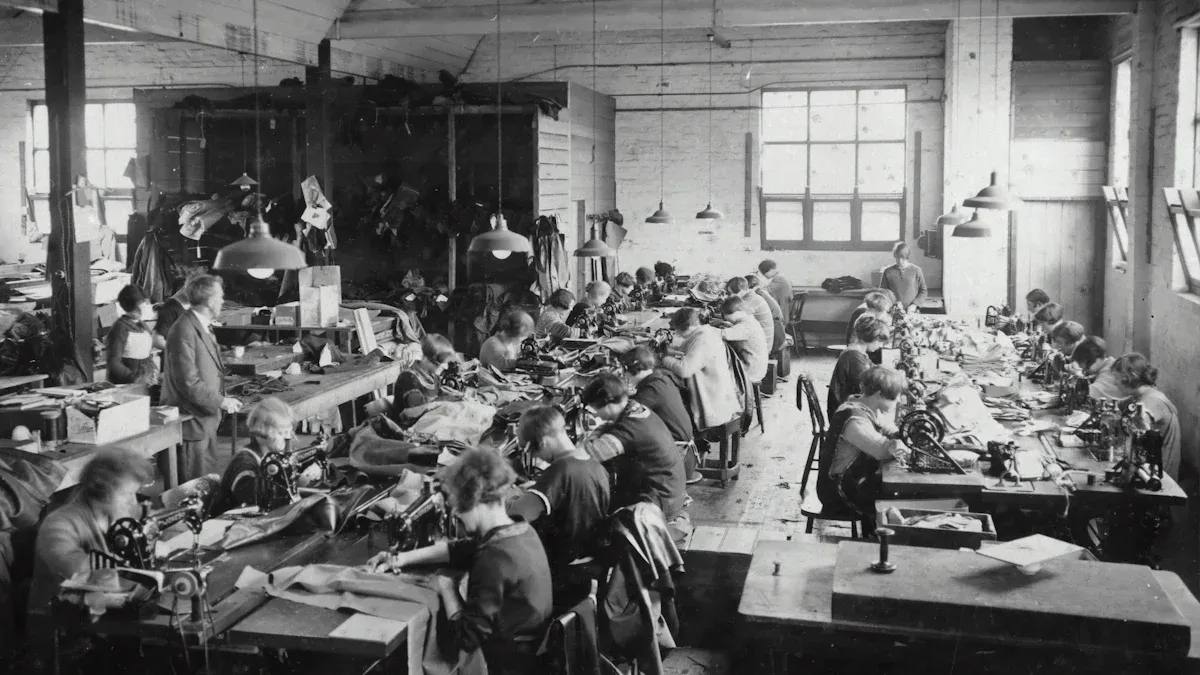
The assembly line changed how things were made. It helped factories make products faster and for less money. Henry Ford used a moving assembly line. This cut car-making time from over 12 hours to just 93 minutes. Cars became cheaper for people to buy. Workers got higher pay and better work conditions, like Ford’s five-dollar day. This made life better for workers. But jobs became boring and not as fun. Today, factories use machines and robots. These help work go faster, with fewer mistakes, and make better products. Factories now focus on being green and making special products. Companies do this to meet what people want and to follow rules for the environment.
People used step-by-step manufacturing before the Industrial Revolution. Ancient people wanted to make things faster and easier. In the Bronze Age, workers could make many sickles at once with a mold. Chinese workers made crossbows with parts that could be switched out for big armies. The Terracotta Army was made with molds that were all the same, which is like an early assembly line. Carthaginian builders made warships for less money. The Venetian Arsenal was known for making almost one ship each day with ready-made parts. These stories show that assembly line ideas started simple and got bigger over time.
| Example | Description |
| Bronze Age sickle mould | A 5-sickle casting mold showing early ways to make many things at once. |
| Crossbows in China | Made during the Warring States period with parts that could be swapped for big armies. |
| Terracotta Army | Built using the same molds, showing an early assembly line idea. |
| Carthaginian warships | Ships made in large numbers for less money, showing smart building in old times. |
| Venetian Arsenal | Made almost one ship a day with ready-made parts, called the first factory system. |
Many people helped change the assembly line. Ransom Olds made the first car assembly line in 1901, so more cars could be built. Henry Ford started the moving assembly line in 1913, which changed factories everywhere. Adam Smith talked about dividing work, which made factories better. Frederick Winslow Taylor made plans to make work faster and more organized.
| Innovator | Contribution |
| Ransom Olds | Made the first car assembly line in 1901, so more cars could be built. |
| Henry Ford | Started the moving assembly line in 1913, changing how things were made everywhere. |
| Adam Smith | Gave ideas about dividing work to make factories better. |
| Frederick Winslow Taylor | Made plans to make work faster and more organized by using the same steps. |
Using interchangeable parts and splitting up jobs changed how things were made in the 1700s and 1800s. Factories got bigger and worked better than small shops. Machines made parts that were all the same, so workers did not need special skills. Companies could teach people to do just one job, which made more things faster. Making, putting together, and fixing things got easier and quicker. Products cost less and were better, and fixing them was simple. More people could buy things, and businesses grew.
| Evidence Type | Description |
| Division of Labor | Work moved from small shops to big factories, making companies bigger and better. |
| Interchangeable Parts | Let workers without special skills make lots of things fast and cheap. |
| Employment of Non-Specialized Labor | Companies could teach people with little training to do one job, making more things. |
| Semi-Skilled Labor | Machines made the same parts, so workers did not need to be experts. |
| Separation of Functions | Making, putting together, and fixing things could be done by workers with some training. |
| Cost and Quality Improvements | More things could be made for less money and were better, so more people could buy them. |
| Mass Production | Helped make lots of things quickly, especially guns. |
| Cost Reduction | Made it cheaper to build things because workers could put them together fast. |
| Easier Repairs | Made fixing and changing parts simple, so things lasted longer. |
| Note: The assembly line started with easy ideas and grew into a way of working that changed people’s lives. Early changes helped make today’s factories possible.
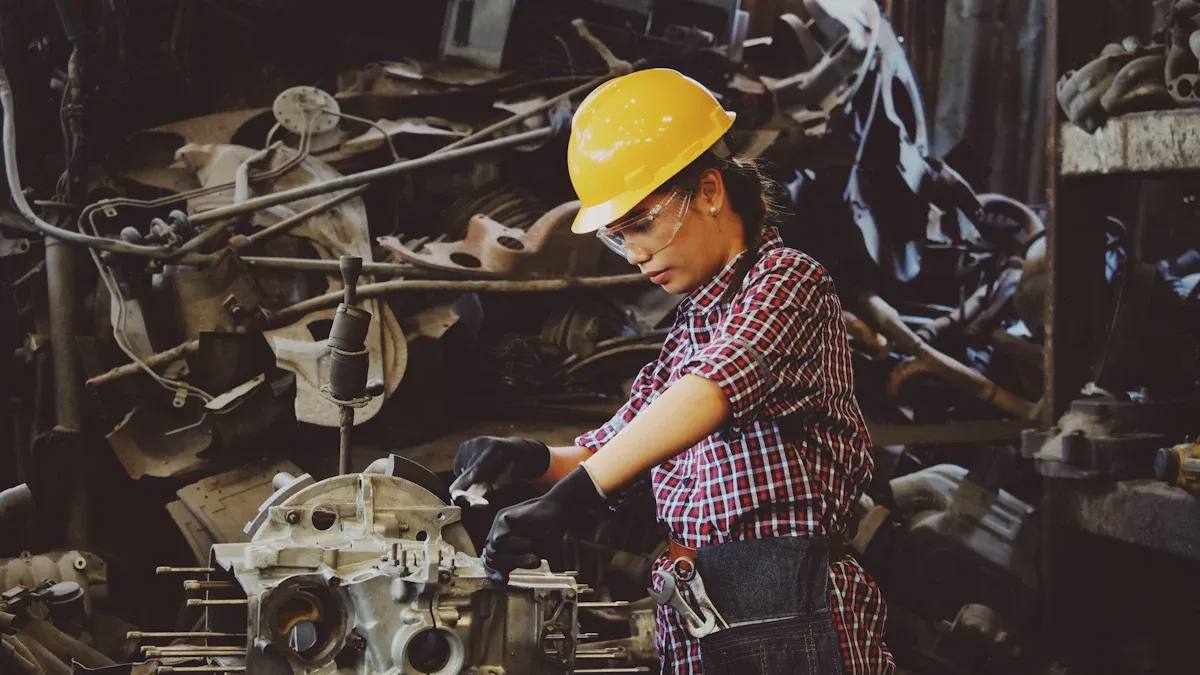
Ransom Olds changed car manufacturing in the early 1900s. He set up the first automotive assembly line. This new way of building cars made a big difference in how many vehicles his company could make.
Olds' assembly line method allowed his factory to produce over 5,000 vehicles in just one year.
The cost to make each car dropped, so the price for a curved dash model in 1904 was only $650.
His company made more money and could build reliable cars again and again.
This step in assembly line evolution helped make cars more common and affordable.
Henry Ford took the idea of the assembly line even further. He introduced a moving assembly line in 1913. This new system changed how fast workers could build cars.
The time to build one car dropped from over 12 hours to just 93 minutes.
The price of a Model T fell from $825 in 1908 to only $260 by 1925.
Ford also started the five-dollar day policy. This meant workers earned more money and could live better lives. The five-day workweek helped people keep their jobs and improved life in Detroit. Ford’s higher wages set a new standard for other companies. Workers could now afford to buy the cars they made, which helped the whole economy grow.
Fordism describes the way Ford’s ideas spread to other industries. Many companies copied his methods.
Factories used machines and molds to make standard products, even with unskilled workers.
Assembly lines with special tools let common-skilled workers help build products.
Companies paid higher wages so workers could buy what they made.
Fordism led to economies of scale and more consumer spending. It trained workers for new jobs and made working conditions better. Many industries, like healthcare and services, used these ideas to improve how they worked. The assembly line evolution did not stop with cars. It changed factories and jobs all over the world.
The assembly line changed factory jobs a lot. Workers made things faster, but did the same job all day. This made work boring and less fun. Many workers felt sad and quit often. Ford saw this and paid workers more with the Five-Dollar Day. He wanted them to stay and feel safe. But he also made strict rules for their lives. Some workers did not like these rules. The assembly line brought more money but made work less enjoyable for many.
| The moving assembly line made things faster but caused many workers to quit and feel less happy at work. Ford paid more, but his strict rules made some people upset.
Factories used assembly lines to make things fast and cheap. This helped more people buy what they needed. The table below shows how assembly lines made things cost less:
| Production Method | Time to Assemble | Cost Impact |
| Traditional Method | 20 minutes | Higher costs |
| Assembly Line Method | 5 minutes | Lower costs |
People could buy cars, appliances, and other things for less money. The assembly line helped families get things they could not buy before.
Assembly line ideas spread to many places. Companies wanted to work better and waste less. Lean manufacturing helped factories use less and make things faster. Toyota led by using mixed-model lines and continuous flow assembly.
Lean manufacturing gives value to customers.
It takes away waste from making things.
It helps workers keep making things better.
Factories everywhere now use these ideas. Lean assembly lines help companies make many things and keep customers happy.
Factories use machines and robots to make products. These machines can work all day and night. This means factories can make more things. Robots move fast and do their jobs very well. They help companies make more items in less time. Machines make sure every product is the same. This helps stop mistakes and keeps quality high. Over time, robots help companies save money. They do this by lowering labor costs and waste.
| Aspect | Description |
| Continuous Operation | Machines and robots work without stopping, so factories make more things. |
| Speed and Precision | Automation works faster and better than people, so products are made quickly. |
| Consistency in Quality | Automated systems help every product meet high standards. |
| Cost Efficiency | Using robots saves money by needing fewer workers and making less waste. |
Robots are now smarter than before. Advanced AI algorithms help robots solve problems. Better vision systems let robots see and handle parts well. Improved force sensing helps robots hold things just right. Easier controls help workers use and talk to robots.
Advanced AI algorithms make robots smarter.
Better vision systems help robots do tasks well.
Improved force sensing lets robots grip things better.
Easier controls help workers work with robots.
Workers need new skills now. They learn to use, fix, and program robots. This helps them do their jobs better with machines. The assembly line evolution has made factories safer and more efficient.
Industry 4.0 uses smart machines, sensors, and computers. These tools help factories collect and use data. Cyber-physical systems, IoT, and AI work together to make products better. Factories can share information right away and make quick choices. Predictive maintenance helps keep machines working and stops breakdowns.
Industry 4.0 uses cyber-physical systems, IoT, AI, and big data to make factories work better.
It lets factories share data quickly and make fast choices.
These tools help fix machines before they break.
Smart factories use sensors and robots to gather and study data. This helps them make better choices and have fewer mistakes. Connecting production data with business systems gives managers more information. Studies show smart factories find more mistakes and make more good products.
Smart factories use sensors and robots to collect and study data.
Connecting data with business systems helps managers make better choices.
Studies show smart factories find more mistakes and make more good products.
AI and IIoT help factories work by themselves and do better. Big data analytics show managers what is happening with all machines. This helps fix problems before they get worse and keeps work going.
AI and IIoT help factories work on their own and do better.
Big data analytics help managers see what is happening in real time.
IIoT connects machines and devices. AI uses this data to make fast choices and improve how things are made. Digital integration links everything in the factory, which is important for Industry 4.0.
IIoT connects machines and devices, so AI can use data to make things better.
Digital integration links everything in the factory, which is important for Industry 4.0.
People and machines now work together on assembly lines. Collaborative robots, called cobots, help workers but do not take their jobs. Cobots do heavy work, so workers can solve harder problems. Smart sensors and AI tools help keep workers safe.
| Benefit/Role | Description |
| Collaborative Robots (Cobots) | Cobots help workers and make jobs easier and faster. |
| Reduction of Workplace Fatigue | Cobots do heavy lifting, so workers can do harder tasks. |
| Enhanced Safety | Smart sensors and AI tools help stop accidents and keep workers safe. |
| Improved Quality Control | Workers check quality and safety to make sure products are good. |
| Innovation in Manufacturing | People and robots working together bring new ideas to factories. |
Workers still need to use their judgment. They check for quality and safety. Their experience helps fix problems that robots cannot solve. Working together helps people and robots come up with new ideas.
Training helps workers learn new skills. Companies want workers to always try to get better. Leaders show good attitudes about using new technology. Coaching helps workers learn to use AI and robots.
Always trying to get better helps workers learn from problems.
Leaders help everyone feel good about using new technology.
Coaching helps workers learn to use AI and robots.
Companies that focus on training and culture do better. Workers use new technology more. People are less afraid of change. New technology gets used faster.
Workers use new technology more.
People are less afraid of change.
New technology gets used faster.
Good training programs help with technical, human, and company needs. Companies must get data ready, set up systems, and make rules for using data. This helps workers do well in modern factories.
| Tip: When people and robots work together, assembly lines are safer, more productive, and more creative. This teamwork helps make better products and new solutions.

Customers now want products made just for them. Companies use flexible systems to make different things fast. Modular lines help factories build small batches of many products. Sensors in products make digital twins that update right away. This lets factories change how they make things for each order.
Flexible systems let companies make many products without slowing down.
Digital twins help track and change products as they move.
Customers want things that fit their needs, so factories move from mass production to mass customization.
Advanced automation helps factories change lines quickly. Modular designs let workers swap parts and make new things. Data helps companies guess what customers want and change products. Engineer-to-order and configure-to-order models give buyers more choices. These changes let more people get custom products.
Factories must protect the earth and follow rules. They use many ways to do this:
Know about local and world rules.
Check for risks and fix problems.
Work with suppliers who follow green rules.
Keep records of what they do to follow rules.
Watch and change plans as rules change.
Plan for emergencies to stop damage.
Tell others what they do to be open.
Green practices help factories use less energy and make less waste. Designers use computer tests to find problems before building. Early choices can save money and help the earth. Companies spend less on energy and waste. Caring about the earth makes customers trust them and helps avoid fines.
| Tip: Making good choices early can lower costs and help the planet.
New technology keeps changing how factories work. The Industrial Internet of Things links machines and shares data. Big data helps managers make better choices. Computer vision lets machines check for mistakes. Advanced robots work faster and better.
| Aspect | Description |
| Automation Benefits | Cuts labor costs and reduces errors. |
| Efficiency Improvement | Speeds up production and manages inventory. |
| Initial Investment | Needs money and training for best results. |
Robotic arms weld, paint, and pack things very well. Vision systems use cameras to find mistakes and fix them fast. Controllers help machines work together. IoT devices help machines talk and know when to fix themselves.
AI and automation help companies solve new problems. Digital tools make work easier and help teams grow. As companies get bigger, keeping quality high is harder. More technology means more planning and teamwork.
The assembly line will keep changing as factories use smarter machines and better data. These changes help companies face new problems and make better things for everyone.
The assembly line changed how people make things, do their jobs, and live their lives.
It helped factories work faster and gave people more jobs.
New ideas let companies make special products and spend less money.
Training workers is still important, so leaders make work safe and team up with others to find skilled people.
An assembly line is a way to make products step by step. Each worker or machine does one part of the job. This method helps factories build things faster and with fewer mistakes.
Henry Ford and his team created the moving assembly line in 1913. They used belts to move car parts from one worker to the next. This idea changed how factories worked around the world.
The assembly line gave many people jobs. Workers earned more money and worked fewer hours. Many workers did the same task all day, which made some jobs boring or tiring.
Factories made more items in less time. Machines and workers repeated the same steps. This process lowered costs and made products like cars and appliances affordable for more families.
Industry 4.0 uses smart machines, sensors, and computers. These tools help factories collect data and make better choices. Industry 4.0 helps factories work faster and fix problems before they get big.
The company's products include various full- automatic componentsproduction and processing equipment, full-automatic assemblyequipment, full-automatic production lines, robotics and visionintegration applications, etc