You can see that these ten companies are leaders in automated assembly line changes: ABB Robotics, KUKA AG, FANUC Corporation, Yaskawa Electric, Universal Robots, Tesla, Boston Dynamics, Nvidia, Miso Robotics, and Locus Robotics. They stand out for using advanced technology. Their solutions boost efficiency. They cut errors, ensure worker safety, and allow for quick setup changes.
ABB Robotics is a top company in smart manufacturing. The company makes robots that help assembly lines work better. ABB works in many areas like cars, electronics, and consumer goods. Their robots are used in factories all over the world. ABB builds machines that work safely with people. These machines can change tasks quickly.
ABB uses smart automation to help you. The company uses artificial intelligence so robots can learn new things. ABB’s robots do hard jobs like picking parts and packing items. Their systems connect easily with other machines. This helps you change your assembly line fast for new products. ABB lets you collect real-time data to find problems early. You can fix issues before they slow down your work.
ABB has many products that stand out. The GoFa cobot works safely next to people. It helps with jobs that need careful handling. The IRB 6700 robot moves heavy things and works long hours. ABB’s FlexPicker robot sorts and packs items quickly. These products make your assembly line faster and more reliable.
ABB Robotics helps factories in big ways. Electrolux Group in Brazil used ABB’s collaborative robots for refrigerators. Productivity went up by 68%. ABB’s robots helped with gas leak checks and electrical tests. Workers got new jobs that were more important. The GoFa cobot replaced an old robot and made testing better by 8%. Production stopped less often, and safety got better. ABB’s solutions help you save money, work faster, and keep your team safe.
FANC Corporation is a leader in robotics. The company makes robots and CNC systems for many industries. You see their robots in car, electronics, and medical factories. FANUC focuses on making machines that work well and last long. Their robots can run for hours with few breaks. FANUC works with other companies to make automation better.
FANUC creates technology to help automate assembly lines. Their robotic systems do many jobs in factories. FANUC uses AI-powered 3D vision for accurate work. Robots can handle moving parts with great care. Custom end-of-arm tools let robots do special jobs fast and safely. These tools help factories work quicker and change tasks easily.
Robotic Assembly Systems for many industries
AI-Powered 3D Vision for careful work on moving parts
End-of-Arm Tooling for quick and safe assembly
You see FANUC robots in car, medical, and home product factories. For example, robots can put together engine covers or medical syringes. FANUC also makes systems for testing and building thermal insulators.
FANUC has products that help assembly lines work better. You can use FANUC robots with Inbolt technology. This lets robots work on moving lines and boosts speed. These systems are faster than old ways. FANUC products can grow with your factory needs. FANUC helps factories make better products faster. Their robots and systems help save energy and improve quality.
Yaskawa Electric is a big name in robotics. The company makes robots and automation systems for many industries. Their robots help factories work better with smart machines. You can use Yaskawa robots for welding, assembly, and packaging. Yaskawa focuses on making your job easier and more efficient.
Yaskawa brings new ideas to assembly lines. They work to automate all parts of production and logistics. The table below shows their latest advances:
| Advancement Description | Details |
| Total Automated Production | Yaskawa automates all production and logistics without people. |
| Data Visualization and Utilization | You can watch and track data from orders to shipping. |
| AI Analysis for Failure Prediction | The YASKAWA Cockpit app finds problems early and helps work better. |
| Multiproduct Variable Quantity Production | You can make many types of products in one process. |
These advances let you see your production in real time. You can find problems early and keep your line running well. Yaskawa’s technology helps you change jobs fast and handle different products easily.
You can use Yaskawa robots in many ways on your assembly line. Their robots do jobs like picking, placing, and welding. These machines work fast and are very accurate. Yaskawa’s systems connect with your other machines, so you can control everything together. You also get tools to watch your production and fix problems before they get big.
Yaskawa Electric is changing robotics for factories. The company opened a new robotics center in Franklin, Wisconsin. This helps them make more robots and deliver them faster. Yaskawa also helps local supply chains, so you wait less for parts. The company offers many automation solutions, like strong servo motors and robotic systems. You can count on Yaskawa to lead in factory robotics and help your business grow.
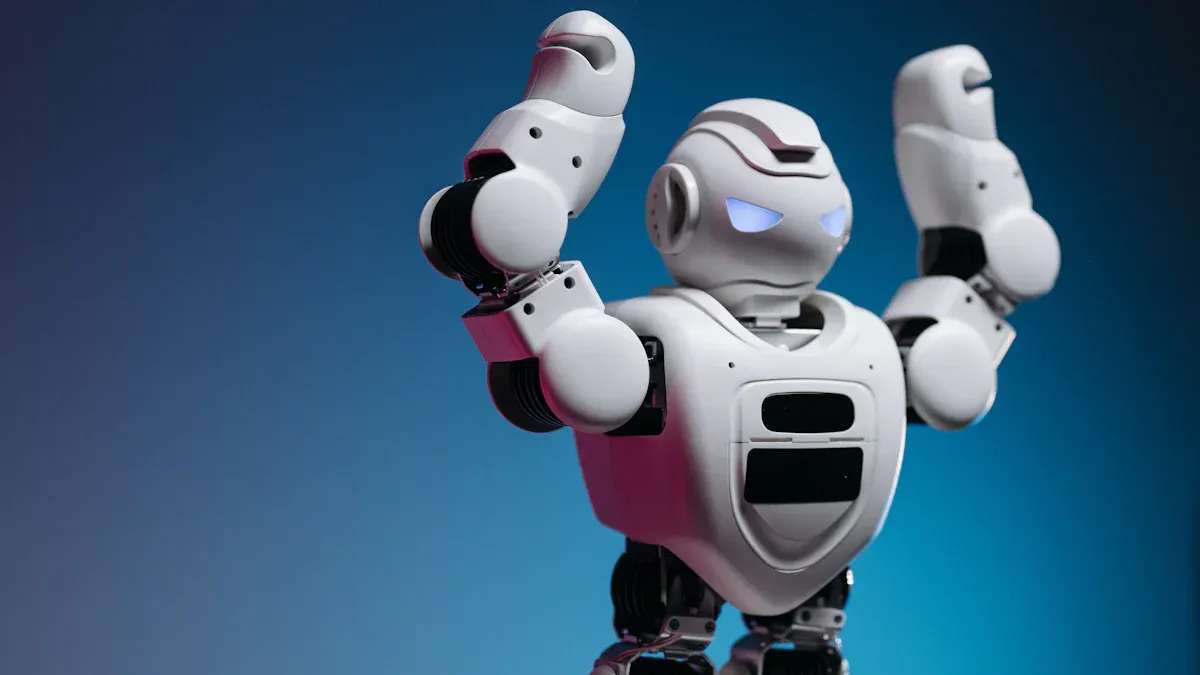
Universal Robots is a top company in collaborative robotics. Their robots work in factories all over the world. These robots are made to work safely with people. You can use them for many jobs like picking parts and putting things together. Universal Robots helps you get more work done and keeps workers safe.
Universal Robots’ cobots work next to people. Cobots have safety features built in. You do not need big safety walls. The robots stop if someone gets close. You can program them easily, even if you are new. This makes it easy to use robots in your factory.
Cobots from Universal Robots do many jobs. You can use them for assembly, packing, and checking quality. The robots help you make fewer mistakes and keep things moving. Cobots fit in small spaces, so you save room.
You can see how cobots help in real factories. Siemens Gerätewerk Erlangen uses 70 UR10e cobots for many jobs. This helps them stay flexible and work well. Bajaj Auto Ltd. uses UR10 cobots to keep work exact. Opel Eisenach Plant uses cobots to handle 30 engines every hour. These stories show how Universal Robots helps you do more with your assembly line.
Tesla is a leader in electric cars and robotics. The company uses smart technology in its factories. Tesla builds cars quickly and with good quality. Their factories have many robots that help with each step. Tesla wants to change how factories work. They use more automation and artificial intelligence.
Tesla’s robots do many jobs in the factory. Robots help with welding, painting, and moving parts. AI-powered systems check for problems right away. This helps fix issues before they slow down work. Predictive tools watch machines and warn about failures. Computer vision AI checks each step to keep quality high.
"Model 3 is the best quality car we made. Automation is a big reason for this." — Elon Musk
Tesla had problems with too much automation at first. The company learned from these mistakes and made smarter systems. This made production better and cut down on waste. Now, Tesla makes more cars and better cars because of these changes.
Tesla’s robots changed how the company makes cars. Real-time checks mean fewer mistakes. New systems help stop downtime and keep work going. Tesla’s automation helps make cars faster and better. Other companies look to Tesla as an example for their own assembly lines.
Boston Dynamics makes robots that move like animals and people. These robots help with real jobs. They build machines that walk, carry things, and work in hard places. You can use their robots in factories and warehouses. They also work outside. The company wants robots to solve tough problems and keep workers safe.
Boston Dynamics is a leader in advanced robotics. Their robots have smart sensors and strong motors. These robots can see and balance well. They move with skill. Some robots walk on rough ground and climb stairs. Others carry heavy things. Here is a table with their top robots and what they do:
| Robot Name | Description | Applications |
| Spot® | A quadruped robot | Does inspections and helps with public safety |
Stretch | A box-moving robot | Moves boxes in stores and warehouses |
Atlas® | An electric humanoid robot | Being developed for many different jobs |
You can use these robots to check equipment or move boxes. They also help test new ways to build things.
Boston Dynamics is working on the electric Atlas robot. This robot acts like a person and learns new jobs. Atlas can do tasks that need careful hands and smart thinking. It helps with jobs on assembly lines that need fine skills. Atlas can change tools and check quality. It works with other machines. Atlas uses learning programs to get better at jobs.
Nvidia is a top company in AI and robotics. Their technology is used in smart factories everywhere. Nvidia makes strong chips and software for robots. These tools help robots think and learn new things. You can use Nvidia’s products to make your assembly line better. Nvidia works with other companies to bring new ideas to factories.
Nvidia’s AI helps robots learn quickly and do jobs well. Their three-computer system trains robots and runs tests. It also helps robots work faster in real factories.
“NVIDIA’s three-computer architecture lets robots learn, test, and work faster. This helps factories use smart robots and software.”
You can use NVIDIA Isaac Lab to teach robots with fake data. This means robots learn hard jobs without stopping your assembly line. Nvidia’s AI makes robots smarter and helps you do tough tasks.
Nvidia’s technology works with your assembly line. You can use the Jetson platform and Vention’s MachineMotion AI controller. This setup gives robots real-time vision and lets them make choices. Robots work faster and more accurately. Nvidia’s tools help you collect data and improve your line.
Nvidia teams up with big companies to improve robotics. Here are some important partnerships:
Nvidia and Samsung are making an AI Factory with Nvidia’s technology.
Samsung uses Nvidia’s Omniverse platform for digital twins and better tests.
They use Nvidia’s RTX PRO Servers and Jetson Thor platform for smart robots.
Nvidia’s cuLitho library helps Samsung’s lithography go faster.
Samsung uses Nvidia’s AI to make better choices and run robots well.
The goal is to have factories that run themselves with smart robots and AI.
You get the newest technology in your factory because of these partnerships.
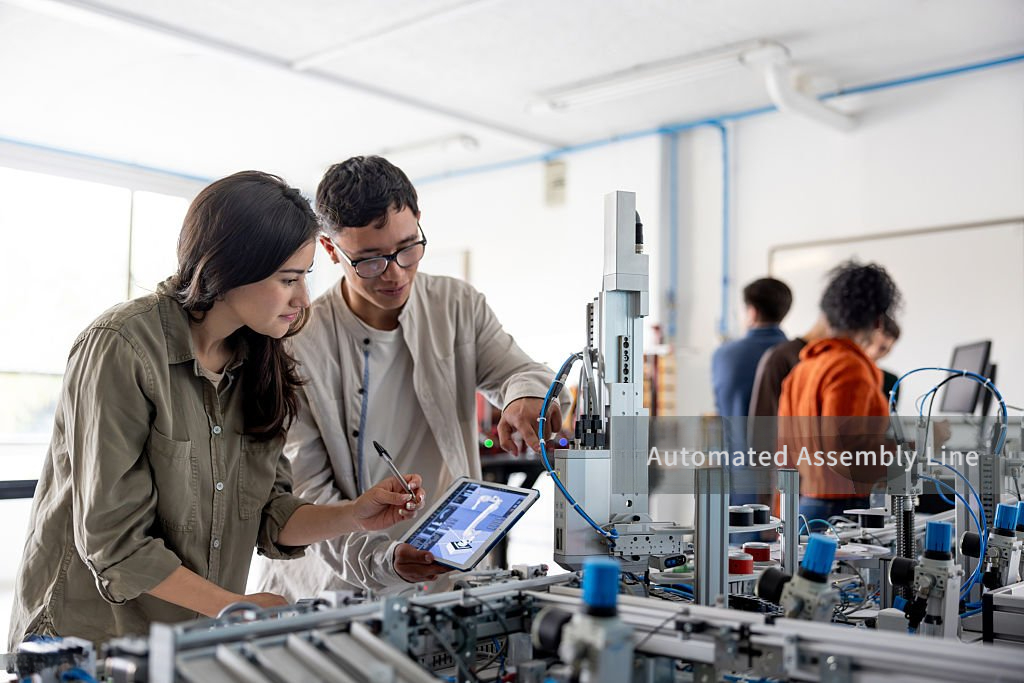
You see Miso Robotics as a leader in kitchen automation. The company builds robots that help restaurants and food businesses work faster and smarter. Miso Robotics focuses on making machines that handle food safely and with care. You can trust their robots to do jobs that need accuracy and speed. Their goal is to change how you think about food preparation and service.
Miso Robotics uses artificial intelligence to power its robots. You find their Bowl Builder technology in restaurants that serve customizable bowl meals. This system works well for places like Chipotle, where you pick your own ingredients. The Bowl Builder uses a closed-loop conveyor to move bowls through each step. The robot places each ingredient in the right spot and reduces food waste. You get a clean and efficient automated assembly line for food.
The company also makes the Flippy fry station robot. Flippy uses AI to cook and handle fried foods. It works quickly and does not get tired. You can count on Flippy to keep up with busy times and help your team serve more customers. These robots help you save money and boost your kitchen’s output.
You can use Miso Robotics’ solutions to improve your restaurant’s assembly line. The Bowl Builder automates the process of making food bowls. It places each topping with care and keeps the line moving. Flippy handles frying tasks and makes sure food cooks evenly. Both systems help you reduce mistakes and keep food quality high. You get more meals out faster and use less labor.
Tip: Miso Robotics’ robots fit into many kitchen layouts. You do not need to change your whole setup to start using them.
Restaurants that use Flippy see big changes. The newest Flippy robot is smaller, faster, and easier to install. You can set it up quickly and start seeing results. Many owners report saving $10,000 to $20,000 per month at each location. These savings come from lower labor costs and faster service. Customers get their food sooner, and you make more sales. Miso Robotics helps you run a better, more profitable kitchen.
Locus Robotics is a leader in warehouse automation. The company makes robots that move things fast and accurately. These robots help over 150 big brands at more than 300 sites. You can find their robots in stores and factories. Locus Robotics has won many awards for new ideas. They have been on the Inc. 5000 list three years in a row.
Locus Robotics builds AMRs for assembly lines. These robots use smart navigation like LIDAR and cameras. They move safely and do not bump into things. You can change the robots to fit different shelves and jobs. The Origin robot carries up to 80 pounds. The Vector robot can hold up to 600 pounds. The robots work with your current systems. You do not need to change your whole setup.
Locus Robotics helps your assembly line work better. The robots pick orders and move materials by themselves. This lets workers do more important jobs. The robots make picking more accurate and faster. Companies like DSV work better after using the LocusONE platform. You do not need to change your building. The robots find their way and plan the best routes.
AMRs make picking orders more accurate.
They do warehouse jobs so your team can focus on big tasks.
Cameras help robots avoid things and keep everyone safe.
Locus Robotics has helped many companies with logistics. You see products move two to three times faster with their robots. The robots help deliver things quickly and meet customer needs. The Locus system lets you grow your business fast. You get a flexible logistics setup that helps you stay ahead.
Tip: Locus Robotics lets you improve your assembly line without big changes. This makes automation easier and saves money.
Every company in the top 10 has something special. They each help automated assembly lines in their own way. Some companies use smart robots. Others focus on software or flexible systems. The table below shows what makes some companies different:
| Company | Unique Strength | Technologies |
| ABB | Global leader in industrial automation and robotic | IoT integration, high-speed robots |
| KUKA | Best for collaborative robotics | Collaborative robots, flexible manufacturing solutions |
| FANUC | Top in industrial robots and AI analytics | AI-powered robots, predictive maintenance |
| Yaskawa Electric | Automates all production and logistics without people. | AI Analysis for Failure Prediction |
| Universal Robots | Easy-to-use collaborative robots | Plug-and-play cobots, safety features |
| Tesla | Advanced AI and smart factory design | AI-driven robots, real-time quality checks |
Boston Dynamic | Robots with advanced movement | Humanoid and quadruped robots |
| Nvidia | Strong in AI for robotics | AI chips, simulation platforms |
Miso Robotic | Focus on food automation | AI-powered kitchen robots |
Locus Robotics | Leading in warehouse AMRs | Autonomous mobile robots, smart navigation |
Market position shows how much a company can change things. Companies with big reach or strong partners set new trends. The table below shows how some leaders shape the market:
| Company | Key Strengths |
| ABB Ltd | Innovator in robotic arms and smart manufacturing integration. |
| FANUC Corporation | Leading in industrial robots and AI-based predictive analytics. |
| Universal Robots | Pioneer in collaborative robots for flexible assembly lines. |
| Tesla | Sets standards in smart factory automation and AI use. |
| Locus Robotics | Drives warehouse automation with scalable AMRs. |
ABB and FANUC make new robots and smart systems. Universal Robots helps many businesses use automation easily. Tesla uses AI and smart factories to push limits. Locus Robotics helps move goods quickly and accurately. Each company helps you make your assembly line better in its own way.
Emerging Technologies
Factories are starting to use new technology. Many companies use collaborative robots called cobots. Cobots work next to people and help with safety. They also make work go faster. Machine learning and AI let robots learn from each job. Robots can change how they work without new programming. 3D vision systems help robots see in three ways. This makes robots more careful and flexible on the assembly line.
Evolving Industry Needs
Factories want more than just fast work now. You need robots that can switch jobs quickly and keep people safe. Many companies use cobots to make work safer and products better. AI and machine learning help robots work in busy places. Cobots do not need big cages, so you save space. Some companies test humanoid robots in real factories. These robots can fit into your team and help with many jobs.
You need more flexibility, safety, and efficiency at work.
Cobots help keep people safe and make better products.
AI and machine learning help robots do hard jobs.
Cobots work without cages, so you have more space.
Humanoid robots can join your team and do different jobs.
You will see these trends shape the next wave of automated assembly line solutions.
You get faster production, fewer mistakes, and safer work areas. Robots help you save money and improve product quality. You can also change tasks quickly when you need to.
Cobots have sensors that stop the robot if you get too close. You do not need big safety cages. This lets you and the robot work side by side without worry.
Yes, you can. Many robots fit into small spaces. You do not need to change your whole setup. Some robots, like cobots, work well in tight areas.
The company's products include various full- automatic componentsproduction and processing equipment, full-automatic assemblyequipment, full-automatic production lines, robotics and visionintegration applications, etc